What if your best webinar could keep working for you long after you pressed “end session”? Automated webinars let you take a recorded presentation and deliver it to new audiences on a schedule you control — complete with registration pages, email reminders, polls, and live chat simulation. The result is a professional webinar experience that generates leads and drives results around the clock, without you having to show up each time. This guide covers everything you need to know to run automated webinars effectively.
|
📌 Key Insights
|
What Is an Automated Webinar?
An automated webinar is a pre-recorded webinar that plays at scheduled times or on demand, giving attendees the experience of a live webinar without requiring the host to present in real time. From the attendee’s perspective, it still looks and feels like a live session — there’s a registration page, confirmation emails, reminders, and a webinar room where the content plays. 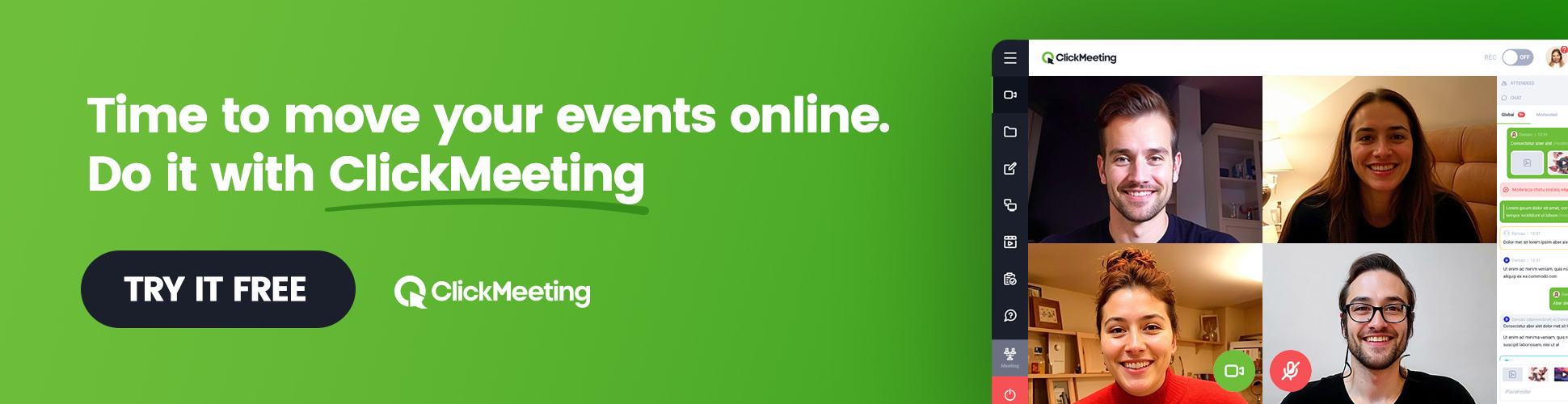
What makes an automated webinar different from just uploading a video is the surrounding infrastructure. The platform handles webinar registration, sends email reminders, triggers polls at preset moments in the recording, and can display a simulated live chat. That combination is what separates a true automated webinar from a simple replay or on-demand video.
Evergreen webinars are automated webinars built to stay relevant indefinitely — topic-focused content like “how to get started with X” or “the fundamentals of Y” that doesn’t date quickly. An evergreen webinar funnel can quietly generate leads and sales for months or even years with minimal upkeep.
How Do Automated Webinars Work?
The automated workflow begins before a single attendee signs up. You start by recording your webinar — or selecting a previous webinar recording — and uploading it to your automated webinar platform. From there, the platform takes over the logistics.
Here is what the typical webinar automation sequence looks like:
- Webinar registration: A prospect finds your registration page, fills in their details, and receives a confirmation email with a link to join.
- Lead capture: Every registrant’s contact information is stored, creating a list of qualified leads who have self-selected into your topic.
- Email reminders: The platform sends automated reminder emails — typically 24 hours before and 1 hour before the session — to maximise webinar attendance.
- Live session simulation: At the scheduled time, the recording plays inside the webinar room. Pre-programmed polls, handouts, and call-to-action buttons fire at predetermined timestamps.
- Post-event follow-up: After the session ends, automated follow-up emails go out — with a replay link, resources, or a CTA to the next step in your funnel.
This entire webinar automation loop runs without manual intervention. Once the automated workflow is configured, it repeats for every future session.
What Are the Different Types of Automated Webinars?
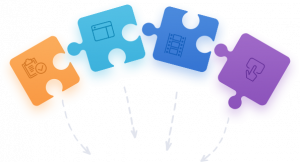
Not every automated webinar runs the same way. Depending on your goals and audience, you’ll want to choose the format that fits your funnel best. ClickMeeting offers three core types, each suited to different scenarios.
Scheduled Automated Webinars — What Are They?
Scheduled automated webinars run on fixed dates and times, exactly like a live event would. You set the calendar, attendees register, and the recording plays at the appointed hour. This format creates a genuine sense of anticipation — people block time in their calendars and arrive mentally prepared.
This is particularly useful when you want your automated webinars to feel like real events. Scheduling future webinars across multiple time zones means you can serve international audiences without losing the structured feel of a live launch or training session.
Just-in-Time Automated Webinars — How Do They Differ?
Just-in-time automated webinars are designed to start very shortly after a registrant signs up — typically within 15 to 30 minutes. This format capitalises on the moment someone is most interested: right after they’ve searched for a solution and found your registration page.
The conversion rate potential of just-in-time webinars is significant. When someone discovers your webinar while actively looking for information, a near-immediate start reduces the gap between interest and action — fewer people drop off before attending.
On-Demand Webinars — When Should You Use Them?
On-demand webinars put the attendee fully in control. After registering, they can access the recorded webinar whenever it suits them — whether that’s immediately or three days later. There is no fixed start time, making on-demand content the most flexible format for pre-recorded webinars.
On-demand webinars are ideal for content that functions as a reference resource — step-by-step tutorials, product walkthroughs, or deep-dive educational content. Including a replay option for previous live sessions in on-demand format extends their value well beyond the original air date.
|
Ready to turn your best presentation into a webinar that works around the clock? |
Why Use Automated Webinars? The Key Benefits
The case for automation comes down to one simple fact: your time is finite, but your audience’s availability isn’t. Here are the core reasons teams invest in automated webinar software.
How Do Automated Webinars Help You Generate Leads?
Every registration form is a lead capture moment. Because automated webinars run continuously — on scheduled dates, just-in-time, or on demand — your webinar funnel never sleeps. Prospects from any time zone can find your registration page, sign up, and enter your database at any hour.
The numbers back this up. According to ClickMeeting data, 73% of B2B webinar attendees convert into leads. Centrum Verte, an HR training company using ClickMeeting, generated 81,018 leads in a single year — an outcome that would be impossible with live-only webinar sessions.
What Impact Do They Have on Webinar Performance and Audience Engagement?
Pre-recorded webinars are typically polished versions of your best delivery. Unlike live webinars — where technical issues, stumbled words, or off-days affect quality — an automated webinar presents your content at its most consistent. That consistency supports stronger webinar performance across every session.
Engagement features built into the platform keep audience engagement high even without a live presenter. Polls fire at timed intervals, Q&A sections invite responses, and CTA buttons appear at precisely the right moments in the presentation. When these engagement features are well-planned, attendees often don’t notice — or don’t mind — that the content is pre-recorded.
How Do They Drive Results Beyond the Initial Live Session?
A recorded webinar doesn’t just serve the original audience. Every time it plays for a new group, it drives results: new leads enter your CRM, new prospects progress through your funnel, and new customers potentially convert. The ROI compounds over time, particularly for evergreen content that stays relevant across multiple seasons.
- Scale your reach without scaling your team — one recorded session can serve thousands of attendees over its lifetime
- Remove time zone barriers — international audiences can attend at locally convenient times
- Free up presenter time — your team can focus on live events, sales calls, and content creation instead of repeating the same presentation
- Maintain quality — your best performance becomes the standard for every future session
What Are the Best Use Cases for Automated Webinars?
Certain content types are natural candidates for automation. The common thread is content that doesn’t change frequently and delivers value regardless of when it’s consumed.
Product demos and onboarding: A walkthrough of your software or service is perfect for automation. New customers or trial users can access it on demand, reducing pressure on your customer success team while ensuring every new user gets a complete introduction.
Lead magnet webinars: A topic that addresses a real pain point for your target audience — “how to do X”, “the complete guide to Y” — works well as an evergreen webinar at the top of your webinar funnel. Pair it with lead capture on the registration page and a follow-up sequence, and the entire webinar funnel runs automatically.
Training and education: Courses, compliance training, and onboarding programs fit the automated format well. Participants can access modules when their schedule allows, and you can attach a handout or supporting document to give them reference material after the session.
Sales enablement: A recorded demo or case study presentation can run as a just-in-time webinar for warm prospects who visit your pricing page. The email marketing tools built into webinar platforms let you trigger follow-up sequences based on what attendees watched and how they interacted.
Thought leadership and brand building: Industry insight sessions that cover fundamentals or best practices stay relevant long after the recording date. An evergreen webinar funnel built around a high-value topic can keep bringing in new subscribers for years with only occasional updates.
|
“ What we observe across our platform is that the most effective automated webinar setups aren’t just “set and forget” — they’re thoughtfully designed with the attendee journey in mind. Teams that build their automated workflow around real engagement features: timed polls, strategically placed CTAs, downloadable handouts, and a well-crafted follow-up sequence tend to see substantially better conversion rates than those who simply upload a recording and call it done. The automation handles the scale; the content design handles the results. At ClickMeeting, we’ve watched customers go from a single live session reaching 50 people to an automated evergreen webinar funnel reaching thousands each month — without any additional presenter time. Tomasz Bołcun, Brand Manager @ ClickMeeting |
How Does ClickMeeting Compare to Other Automated Webinar Platforms?
When evaluating automated webinar software, you’ll likely come across several well-known options. Demio is popular in the SaaS space for its clean interface and focus on automated and hybrid webinar formats. EverWebinar — the automated counterpart to WebinarJam — is widely used by marketers running evergreen webinar funnels, particularly in the English-speaking B2C market. WebinarJam itself focuses on live events and high-volume audiences, while EverWebinar handles the automated side of the same stack. These are legitimate tools, and many users search specifically for EverWebinar or WebinarJam alternatives when their needs grow or their budget changes.
Where ClickMeeting differs is in the combination of factors that matter to teams outside the US market — and increasingly to those within it. First, ClickMeeting’s servers are located in Europe, which means GDPR compliance is built in by default, not bolted on as an afterthought. For European companies, this removes a significant compliance headache. Second, ClickMeeting is fully browser-based — attendees need no download, no app, no plugin. That alone reduces drop-off at the join screen, which directly affects webinar attendance rates.
The user interface in ClickMeeting is designed for clarity. Setting up a new automated webinar, configuring the timeline, adding polls and a handout, and publishing the registration page can all be done in a single workflow without jumping between tools. And unlike platforms that separate live and automated products into two separate subscriptions, ClickMeeting covers live and automated webinars under one roof — meaning you can run a live session one week and an automated version of the same content the next, all from the same account.
For teams that need the best webinar platform for both regular live events and scalable automated campaigns — especially those with a European audience or GDPR requirements — ClickMeeting offers a combination that purpose-built automated webinar tools like EverWebinar simply don’t provide.
How Do Automated Webinars Compare to Live Webinars?
Automated and live webinars are different tools, not competitors. Understanding where each excels helps you decide which format — or which combination — makes sense for each piece of content. The right choice also depends on your audience, your goals, and how much real-time interaction your content genuinely requires.
| Live Webinar | Automated Webinar | |
|---|---|---|
| Presenter required? | Yes | No |
| Real-time Q&A | Yes — live responses | Simulated or follow-up |
| Scalability | Limited by presenter availability | Runs as many sessions as needed |
| Content freshness | Always current | Requires periodic updates |
| Best for | Live events, product launches, interactive training | Evergreen content, lead generation, product demos |
| Time zone flexibility | Fixed, unless multiple live sessions run | Multiple time slots, global reach |
| Live webinar features | Full: live chat, real-time polls, live Q&A | Simulated: timed polls, pre-set CTA buttons |
A hybrid webinar — where you deliver a live session and then automatically rerun it as an automated replay for those who couldn’t attend — gives you the best of both formats. The live session builds energy and real-time relationship, while the automated replay extends reach without extra presenter time.
What Does the Attendee Experience Look Like?
This question comes up often, and it matters. If attendees feel like they’re watching a poorly packaged replay rather than attending a proper session, engagement drops fast. When an automated webinar is built well, the experience is hard to distinguish from a live one.
From the attendee’s perspective, the journey looks like this: they land on a registration page, complete the form, receive a confirmation email with a calendar link and join details, get reminder emails before the session, and then click into a webinar room where the presentation plays. Polls appear during the session, a live chat allows them to ask questions or leave comments, and a CTA button may appear at a key point in the content.
After the session, they receive a follow-up email — potentially with a replay link if your platform supports post-event access to the recorded webinar, along with any slides, handouts, or next-step offers you’ve set up. That post-event sequence is often where conversions actually happen.
The chat messages attendees send during the session can be reviewed by your team and responded to via follow-up — so even though no one is manning the live chat in real time, no one gets ignored. Some platforms also allow a moderator to join the live chat during the automated session if you want to offer genuine real-time interaction during a recorded webinar.
How to Create an Automated Webinar in ClickMeeting
Setting up your first automated webinar in ClickMeeting takes less time than most people expect. The process is organised into four steps, and the platform walks you through each one. Here’s how to create a professional webinar that runs on autopilot.
Step 1: Upload Your Recording
Start by going to your ClickMeeting dashboard and selecting “Create automated event.” You can upload a new recording or select a previous webinar from your library. Supported formats include MP4, MOV, and other standard video formats. Once uploaded, ClickMeeting processes the file and makes it available for your automated webinar room.
Step 2: Set Your Schedule
Choose the format that fits your goal: scheduled (specific dates and times), just-in-time (starts shortly after registration), or on-demand (attendee controls the start). If you select scheduled, you can set multiple recurring time slots to cover different time zones and maximise attendance across regions. This is also where you configure how far in advance webinar registration opens.
Step 3: Customise Your Registration Page
ClickMeeting gives you a customisable registration page where you can add your branding, a description of the session, and the details attendees need to decide whether to sign up. Keep the page focused — a clear headline, a short description of what attendees will learn, and a visible registration form. The registration page is the front door to your automated webinar funnel, so it deserves attention.
Step 4: Build the Timeline — Polls, Handouts, and CTAs
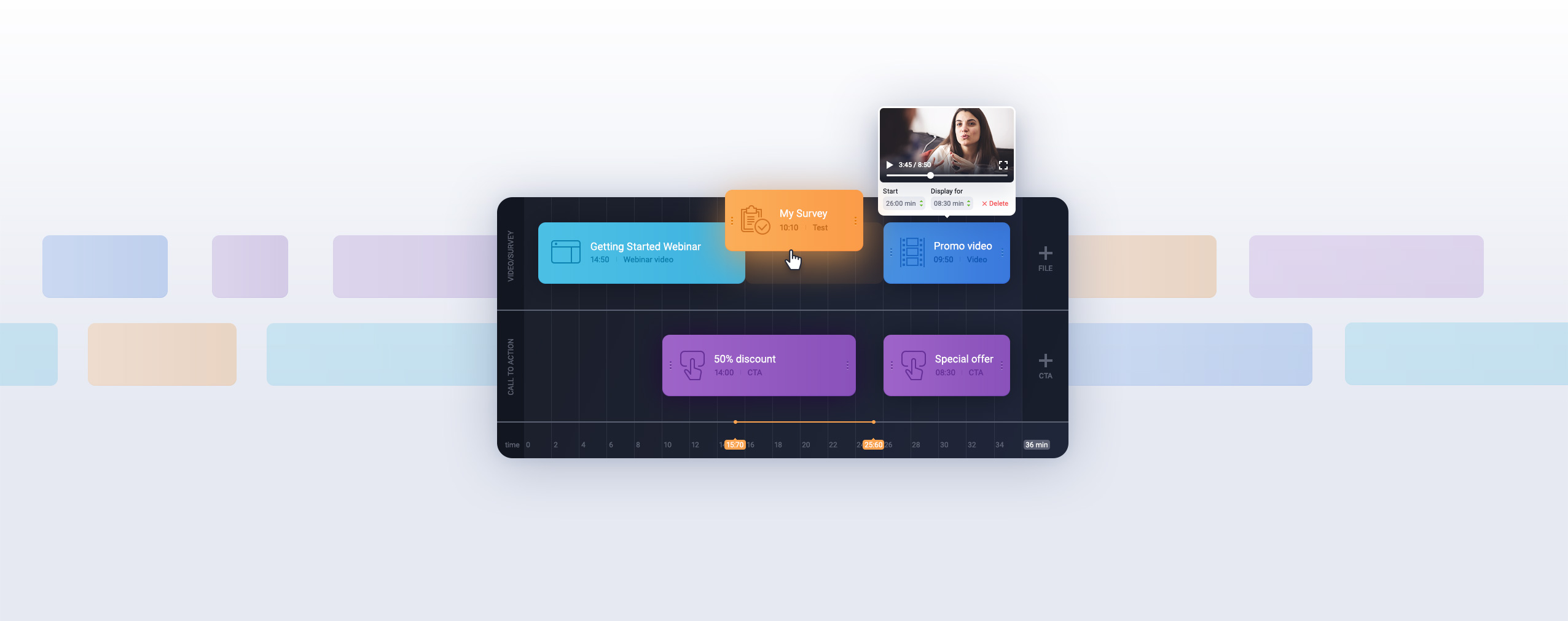
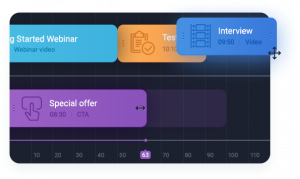
This is where automated webinars go from “a video in a room” to a professional webinar experience. ClickMeeting’s timeline editor lets you add interactive elements at specific timestamps in the recording. You can drop in a poll 10 minutes in, display a handout for download halfway through, and trigger a CTA button in the final minutes when interest is highest. You can also set the automated workflow for email reminders — when they send, what they say, and what follow-up emails go out after the session ends. A well-built timeline is what keeps audience engagement high throughout the entire webinar session.
|
See exactly how the automated webinar builder works — try it free for 14 days or let us walk you through it. |
Best Practices: How Do You Make an Automated Webinar Engaging?
The risk with any automated format is that attendees check out halfway through because nothing prompts them to stay involved. These practices address that directly.
How Do You Use Polls and Chat to Keep Engagement High?
Polls are your most reliable engagement tool in an automated webinar. When a poll appears unexpectedly during the session, it breaks the passive viewing pattern and asks attendees to actively respond. Place polls at natural pause points in the content — after a section conclusion, before a new topic begins, or during a moment where you’d naturally ask a question in a live session.
Live chat is another layer of engagement features worth enabling. Even in an automated webinar, an active chat panel creates a sense of community. If you’re running the session during business hours, consider having a team member available to respond to chat messages in real time. If not, acknowledge in your follow-up email that you’ve reviewed the questions and provide answers.
What Webinar Tools Help Maintain Attention Across the Whole Session?
Beyond polls and live chat, these webinar tools and tactics make a real difference to audience engagement throughout an automated webinar:
- Handouts at the right moment: Offering a downloadable resource mid-session gives attendees a reason to stay and a takeaway that keeps your brand in front of them afterward.
- CTA buttons timed to content: Show your offer or next step at the moment in the recording where it’s most relevant — not at the start when trust isn’t established yet.
- Strong opening two minutes: Your recording should open with a direct statement of what the viewer will gain. Drop-off is highest in the first two minutes — give people a clear reason to keep watching.
- Tight editing: Remove long pauses, technical fumbles, and tangents from the recording before automating it. The webinar sessions that drive results are those that respect the attendee’s time.
- Follow-up timing: Send the post-event email within two hours of the session ending. By the next morning, the content is already less fresh in the attendee’s mind.
Webinar Analytics: How Do You Measure Performance?
Running automated webinars without reviewing the data is like running a sales campaign without looking at the numbers. Your webinar analytics dashboard is where you find out what’s actually working — and what your next improvement should be.
What Does the ClickMeeting Webinar Analytics Dashboard Show?
ClickMeeting’s webinar analytics dashboard gives you a post-event breakdown of each session. You can see how many people registered versus how many actually attended, how long each attendee stayed, when drop-off occurred in the recording, and how attendees responded to polls. It also tracks link clicks on CTA buttons, giving you a direct line of sight into the conversion rate at each stage of the session.
Key metrics to track for webinar performance include:
- Webinar attendance rate: What percentage of registrants actually showed up? The average across ClickMeeting platform data is around 75 attendees per session, but attendance rate against registrations varies significantly by format and reminder strategy.
- Audience engagement score: How actively did attendees interact — with polls, chats, CTAs? Low engagement mid-session often points to a specific part of the recording that needs tightening.
- Conversion rate: Of the attendees who clicked your CTA, how many completed the desired action? This is the ultimate measure of whether your automated webinar funnel is doing its job.
- Drop-off points: Where in the recording do people leave? Consistent drop-off at a specific timestamp tells you exactly where to focus your editing efforts.
- Registration source: Where did registrants come from? This tells you which acquisition channels are feeding your webinar funnel most effectively.
How Do You Use Analytics to Improve Future Webinars?
The real value of webinar analytics isn’t knowing what happened in the previous webinar — it’s using that data to make every future webinar better. If your attendance rate is low, revisit your email reminders: are they going out at the right times, with compelling enough subject lines? If your conversion rate is low despite high attendance, the problem likely lies in the CTA placement or the offer itself rather than the content.
A simple improvement cycle works well: review the webinar analytics after each batch of sessions, identify the one metric furthest from your goal, make a targeted change, and measure the impact in the next run. Teams that build this habit consistently outperform those who set up their automated workflow once and never revisit it. Webinar performance compounds when you treat each iteration as a learning opportunity.
Can You Monetize Automated Webinars?
Yes — and for many creators and businesses, the evergreen webinar funnel is their primary revenue mechanism. ClickMeeting supports paid webinars through Stripe, PayU, and PayPal integrations, meaning you can charge for access to your automated webinar sessions directly from the registration page.
ClickMeeting’s State of Online Events 2025 report shows the average revenue from a single paid webinar event is 4,405 PLN, with the top annual earner generating 1,469,517 PLN in a year from their webinar program. The record for a single event reached 155,810 PLN. These numbers reflect what’s possible when automated webinar software is combined with a well-built webinar funnel and consistent lead generation.
For businesses using webinars as a lead generation tool rather than a direct revenue source, the ROI calculation is different but equally strong. Each automated session that runs costs you nothing additional in presenter time. If even a handful of attendees per session convert into paying customers, the economics of an automated webinar funnel are compelling. That’s why the entire webinar funnel — from registration page to post-event follow-up — deserves to be built as carefully as any sales campaign.
Frequently Asked Questions
Here are answers to the most common questions about automated webinars and how to run them effectively.
What is an automated webinar?
An automated webinar is a pre-recorded webinar that plays at set times or on demand, complete with registration, email reminders, polls, and chat functionality. From the attendee’s perspective it resembles a live session, but the presenter doesn’t need to be present for each run. This lets the same content reach new audiences continuously without additional presenter time.
What’s the difference between an automated webinar and an evergreen webinar?
An automated webinar refers to the delivery mechanism — a pre-recorded session that runs on schedule or on demand. An evergreen webinar is a content strategy: a webinar designed around a topic that stays relevant over a long period. Most evergreen webinars are delivered as automated webinars, but not every automated webinar is evergreen. A time-sensitive product launch replay, for example, is automated but not evergreen.
How does automated webinar software like ClickMeeting compare to tools like Demio, EverWebinar, or WebinarJam?
Demio, EverWebinar, and WebinarJam are well-established automated webinar software options, particularly popular in the US market. ClickMeeting differentiates itself by combining live and automated webinars in a single platform, hosting data in Europe for built-in GDPR compliance, and offering a fully browser-based experience that requires no download. For European teams or any organisation with GDPR requirements, ClickMeeting removes compliance complexity that other platforms require you to manage separately.
Can attendees interact in an automated webinar?
Yes — through polls, chat messages, and CTA interactions. Polls are pre-programmed to appear at set points in the recording, and attendees can submit chat messages that your team reviews. Some hosts also join the live chat during automated sessions to provide real-time responses. While the interaction isn’t identical to a live session, well-designed engagement features can make it feel close.
What’s the difference between automated webinars and on-demand video?
On-demand video is essentially a file you can play whenever you like. An automated webinar is a structured event with registration, reminders, interactive elements (polls, CTAs, handouts), and follow-up sequences. The webinar format creates a higher-commitment experience for the attendee, which is why webinars typically convert better than blog posts or simple video content. The registration step alone produces lead data that a YouTube view doesn’t.
How does scheduling work across time zones?
In ClickMeeting, you can create multiple time slots for a scheduled automated webinar to cover different regions. Registrants see the session times in their local time zone based on their browser settings, so there’s no confusion about when the webinar actually starts. For just-in-time and on-demand formats, time zones are irrelevant — the session starts based on registration timing or attendee choice, not a fixed clock.
What do I need to create a professional webinar that I can then automate?
You need a high-quality recording of your presentation — clear audio matters more than anything else. A structured script or detailed outline helps keep the pacing tight, since editing out dead time is much easier than adding energy back in. Beyond the recording itself, you need a registration page, email sequences (confirmation, reminders, follow-up), and a timeline plan for where to place polls and CTAs. ClickMeeting provides all the infrastructure; the recording is the one thing you bring to the platform.
How do I track webinar analytics and performance?
ClickMeeting’s webinar analytics dashboard shows attendance rates, drop-off points, poll responses, CTA click rates, and session duration data after each automated run. You can use this to identify where in the recording engagement dips, which registration sources bring the most qualified attendees, and what conversion rate your CTA achieves. Review the dashboard after each batch of sessions and make one targeted change at a time to improve the next run.
Can I charge for automated webinars?
Yes. ClickMeeting integrates directly with Stripe, PayU, and PayPal, so you can set a price for access to your automated webinar and collect payment at the registration step. The platform handles the payment flow, and registrants receive their join link after successful payment. This is the same infrastructure used by hosts generating over 4,405 PLN per event on average, according to ClickMeeting’s State of Online Events 2025 data.
When should I use a live webinar instead of an automated one?
Use a live webinar when real-time interaction is central to the value you’re delivering — product Q&A sessions with your team, workshops where participants need to share their screens, hot-seat coaching, or anything involving genuine back-and-forth that can’t be replicated with pre-programmed chat. Live webinars also create urgency and community that automated sessions don’t naturally generate. The two formats work best together: run a live session first, then automate the recording as an evergreen replay for future audiences.
|
Start building your automated webinar funnel today — no credit card required for the 14-day trial. |