
You’ve spent weeks planning the perfect webinar. Your content is solid, your speaker is ready, and your landing page looks great. Then you launch your first webinar ad and… crickets. Maybe a few clicks, but nowhere near the registrations you need. Sound familiar? Here’s the truth: creating webinars that people want to attend is only half the battle. Getting the right people to actually see your event? That’s where most organizers struggle.
Key Insights
- A strong webinar ad needs six essential elements — compelling headline, clear value proposition, visual hook, social proof, specific CTA, and urgency. Miss even one and your conversion rate drops significantly.
- The best webinar campaigns use a layered approach — combining paid ads for reach, organic content marketing for trust, and email marketing for conversion. E Level generated 60-65% attendance rates using this exact strategy.
- LinkedIn delivers the highest ROI for B2B webinars — with more precise targeting capabilities than Facebook or Instagram. Companies like Comarch ES successfully host events with thousands of attendees using LinkedIn sponsored content.
- Your graphic matters more than you think — posts with images get 2.3x more engagement than text-only content. Use eye-catching visuals that immediately communicate your value.
- Free webinars build your paid webinar audience — S-FX generated over $380,000 in revenue by strategically using free events to build remarketing lists and nurture leads toward paid offerings.
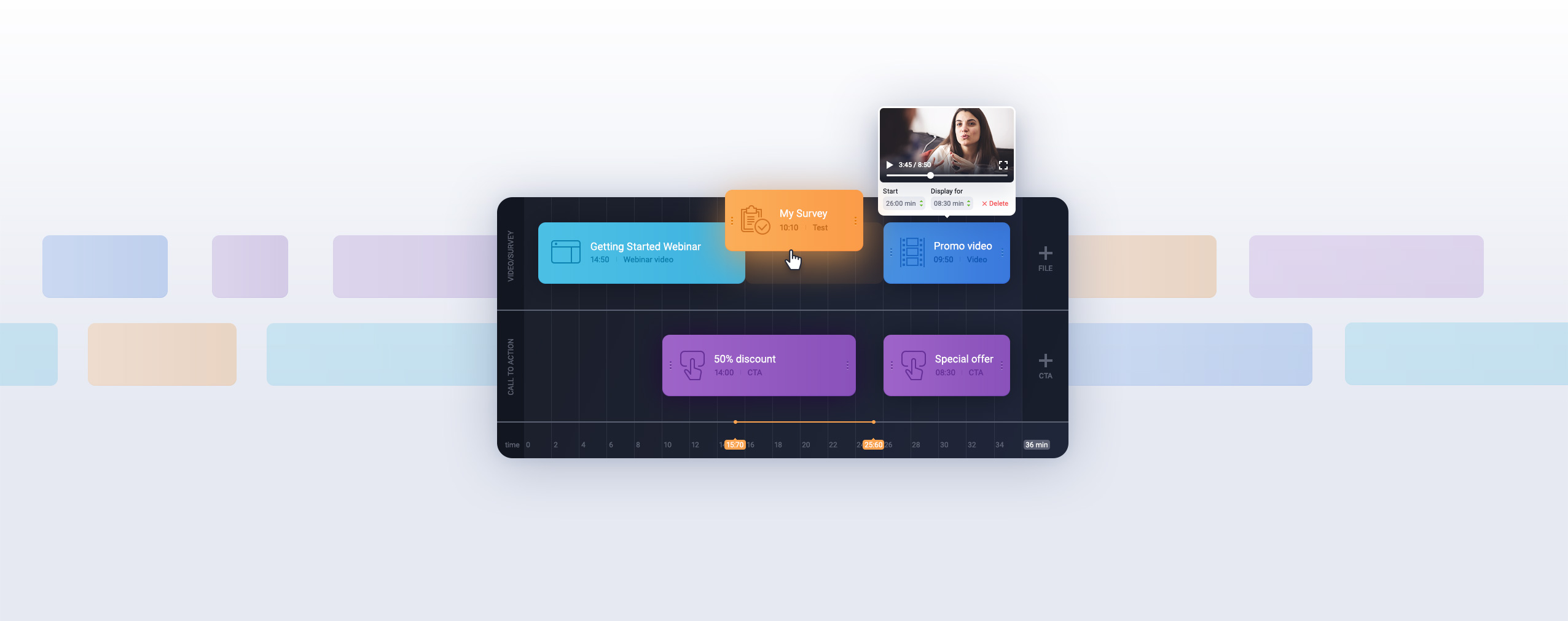
- Automation saves hours while boosting results — ClickMeeting’s automated reminders, registration forms, and calendar integrations help ensure your webinar stays top of mind without manual work.
What Actually Makes a Strong Webinar Ad?
Let’s start with what doesn’t work: generic promises like “Join our webinar to learn more!” or vague headlines that could apply to any topic. Your webinar ad is competing with dozens of others in someone’s LinkedIn feed or Facebook timeline. You have about 1.7 seconds to grab their attention quickly before they scroll past.
A strong webinar ad has six components working together. Your headline needs to stop the scroll immediately — not with clickbait, but with a specific, compelling benefit. Instead of “Master Digital Marketing,” try “How 3 Companies Generated 30,000+ Leads Through Free Webinars in 90 Days.” See the difference? One is abstract, the other promises concrete results.
Your value proposition comes next. What will attendees walk away knowing or being able to do? Verte Training Center didn’t just promise “HR knowledge” — they delivered specific strategies for handling employee relations that attracted companies like Zalando, L’Oréal, and Nestle to their training sessions. That specificity is what turns browsers into registrants.
The graphic you choose serves as your visual hook. This isn’t about making something pretty — it’s about communicating value at a glance. Should you use your face, a data visualization, or a product screenshot? That depends on your webinar topic and brand positioning. For B2B webinars focused on thought leadership, an authority portrait often works best. For results-driven audiences, show the data they’ll learn to generate. 
Social proof builds confidence. A testimonial from a previous attendee, a statistic about results (“Join 40,000+ financial professionals who trust our training”), or trust signals like company logos all work. Thorsten Wittmann International leveraged their 40,000+ member community as social proof in every promotional piece, creating immediate credibility for new prospects.
Your CTA must be crystal clear. Not “Learn More” — that’s what ads don’t do when they want actual conversions. Instead: “Reserve Your Seat,” “Register Free,” or “Save My Spot.” One clear next step, no confusion about what happens when they click. This call to action becomes the bridge between interest and commitment.
Finally, urgency or scarcity creates the nudge people need to act now instead of “later” (which usually means never). Limited seats, early bird pricing, or “Webinar starts in 48 hours” all work. Just make sure it’s genuine — artificial scarcity damages your brand long-term.
Creating a Webinar Ad: The Step-by-Step Process
Theory is great, but you need a process you can actually follow. Let’s break down how to create effective webinar ads from scratch, whether you’re planning a webinar for the first time or refining your approach.
Start by defining your visual hierarchy. What’s the primary element viewers should notice first? For personal brand webinars, that’s usually your face — it builds trust and humanizes the experience. For product demos, show the interface or results. Your secondary element is your headline, which should be bold enough to read on mobile devices. The tertiary elements — your logo, CTA button, and any social proof — support the main message without cluttering the composition.
Next, choose your design approach. Using a template from platforms like Canva, Adobe Express, or ClickMeeting’s built-in tools accelerates production while maintaining consistency. A benefit-driven template emphasizes what attendees gain. A social proof template highlights testimonials or statistics. For creating a webinar ad that converts, match the template style to your audience’s priorities.
Color psychology matters more than most people realize. Blue conveys trust and professionalism — perfect for B2B webinars. Orange and red create urgency and excitement — great for limited-time offers. Green suggests growth and possibility — ideal for educational content. Your brand colors should guide these choices, but understanding the psychological impact helps you emphasize the right emotions and ensure your webinar stands out in crowded feeds.
The biggest mistake I see in webinar advertising? Organizers focus entirely on the event itself and forget that the ad is its own conversion challenge. Your webinar might be brilliant, but if your webinar ad doesn’t immediately communicate specific value in a way that resonates with your target audience, no one will ever experience that brilliance. Treat your ad creative with the same attention you give your content.
Tomasz Bołcun, Brand Manager @ ClickMeeting
Writing Ad Copy That Converts Browsers into Registrants
Your graphic grabs attention, but your ad copy closes the deal. Let’s talk about what actually works when you’re promoting webinars to busy professionals who see hundreds of marketing messages daily.
Lead with the benefit, not the feature. “Learn how to automate your webinar promotion” is a feature. “Cut your webinar promotion time from 8 hours to 20 minutes using automation” is a benefit. Which one makes you want to register?
Use specificity over vagueness. Don’t say “increase engagement” — say “boost attendance rates from 35% to 65% like E Level did.” Concrete numbers make promises believable. When you’re hosting a webinar, every piece of ad copy should pass this test: would my competitor make the same claim? If yes, it’s too generic.
Create curiosity without confusion. “The counterintuitive webinar promotion strategy that generated 30,000 leads for one HR training company” makes people wonder what that strategy is. “New approaches to webinar marketing” doesn’t create any curiosity at all.
Address objections preemptively. If you’re targeting busy professionals, acknowledge it: “Can’t attend live? All registrants get the replay + templates.” If you’re asking for 60 minutes of their time, justify it: “One hour that could transform how you approach…” This is especially important for B2B webinars where decision-makers are weighing multiple priorities.
Power words drive action. Compare these two CTAs: “Click here to learn more” versus “Claim your free seat before they’re gone.” Words like claim, unlock, discover, master, and transform create momentum. But use them honestly — if you promise someone will “master” a skill in 45 minutes, you’d better deliver advanced strategies, not basic tips. Following these best practices ensures your webinar advertisement cuts through the noise.
How to Reach the Right Audience with Paid Ads
You can have the best webinar creative in the world, but if you’re showing it to the wrong people, you’re burning budget. Here’s how to ensure your webinar reaches the right people — the ones who’ll actually show up, engage, and potentially become customers.
LinkedIn for B2B: Your Highest-ROI Channel
If you’re hosting webinars for business professionals, LinkedIn should be your primary paid channel. The targeting precision is unmatched — you can target by job title, company size, industry, seniority level, and even specific companies. This makes LinkedIn ideal when you need to reach the right audience for B2B webinars.
Comarch ES uses LinkedIn sponsored content to reach entrepreneurs and business leaders for their educational webinars. Their events regularly attract thousands of participants because they’re reaching exactly the right audience: decision-makers who need solutions to specific business challenges. When you’re promoting a best webinar to C-suite executives or department heads, LinkedIn’s targeting capabilities become invaluable.
For LinkedIn ads, your graphic should look professional but not overly corporate. Think “conference presentation” not “stock photo.” Your headline should address a specific business pain point. And your CTA should remove friction: “Reserve Your Free Spot” works better than “Learn More” because it clarifies exactly what happens next.
Facebook and Instagram for Broader B2C Reach
When your webinar targets consumers or individual professionals rather than companies, Facebook and Instagram offer better reach at lower cost. A Facebook ad can target based on interests, behaviors, and demographics. For a Facebook event, you can even target people who’ve engaged with similar events.
Video content performs exceptionally well here. A 15-30 second reel showing a quick tip from your upcoming webinar can generate massive engagement. For webinar Instagram posts, use the swipe-up feature (if you have 10K+ followers) or a clear CTA directing people to the link in your bio.
One effective webinar ad strategy: create a short video testimonial from a previous attendee. Real people talking about real results beat polished corporate messaging every time. This trend toward authenticity isn’t going away — it’s becoming the baseline expectation in digital marketing.
Google Ads and PPC for Capturing Search Intent
Google Ads work differently than social platforms. Instead of interrupting people, you’re capturing existing intent. Someone searching “how to generate leads with webinars” is actively looking for solutions. A well-placed search ad using PPC can connect them with your next webinar at exactly the right moment to promote your webinar effectively.
The key is keyword selection. Broad terms like “webinars” are too expensive and unfocused. Specific phrases like “B2B lead generation webinar” or “free financial planning workshop” connect you with a specific audience already interested in your topic.
Google Display ads can also work for remarketing. Someone visited your landing page but didn’t complete registration? A banner ad following them around the web with a reminder can boost conversions by 20-30%. Just don’t overdo the frequency — seeing the same ad 50 times creates annoyance, not urgency. Strategic placement matters as much as creative quality.
Free Resources: Download Our Complete Webinar Promotion Guides
Want a detailed roadmap for promoting your webinars? We’ve created two comprehensive guides that walk you through every step, based on insights from marketing experts and real campaign data from thousands of successful events.
Free Webinar Promotion Guide — Learn exactly how to build buzz for free webinars, from initial announcement through post-webinar follow-up. This powerful tool covers email sequences, content marketing tactics, and organic social media strategies that don’t require ad spend. You’ll discover how to reach your audience across multiple touchpoints and keep your event top of mind.
Download Free Webinar Promotion Guide
Paid Webinar Promotion Guide — Discover how to successfully market paid events, including pricing strategies, conversion tactics for turning free attendees into paying customers, and post-webinar nurture sequences. This marketing tool has helped companies like S-FX generate over $380,000 in webinar revenue by strategically positioning paid offerings and maximizing the success of your webinar through data-driven approaches.
Download Paid Webinar Promotion Guide
Both guides are free, actionable, and based on real results from thousands of successful webinars. Download them now and start applying the strategies immediately.
The Layered Approach: Combining Paid and Organic Promotion
Here’s what most marketing experts won’t tell you: a single ad campaign rarely delivers the results you want. The most effective webinar promotion combines multiple channels working together in a coordinated marketing strategy.
Start with paid ads for reach. Your webinar advertisement on LinkedIn or Facebook gets your event in front of new audiences who’ve never heard of you. This builds awareness and drives initial registrations. But paid ads alone aren’t enough because trust is built through repeated exposure across different types of webinar touchpoints.
Layer in organic content marketing for trust-building. Share valuable content related to your webinar topic across social media platforms. Post insights on social networks, write LinkedIn articles, create short videos. Each piece should subtly reference your upcoming webinar without being purely promotional. This approach ensures your brand stays visible while providing genuine value.
Use email marketing for conversion. People on your email list already know you — they’re warmer leads than cold traffic from paid ads. Send your subscriber base a series of emails: announcement, value-focused reminder, last-chance urgency. Each email should hit their inbox at strategic times, using different angles to resonate with different priorities. Via email, you control the message and timing completely.
DevaGroup Agency masters this layered approach. They combine targeted Facebook events, organic LinkedIn posts, email sequences, and strategic partnerships with influencer-type industry experts. The result? Consistently full webinars with highly engaged audiences who show up ready to participate. This integration across channels is what separates effective webinar campaigns from mediocre ones.
Optimizing Your Landing Page for Maximum Sign-Ups
You’ve created a compelling webinar ad. People are clicking. But if your landing page doesn’t convert those clicks into sign-ups, you’re wasting your ad budget. Every element on this page needs to guide visitors toward one action: completing that registration form.
Your headline should match your ad promise. If your ad said “Learn the 3-step system that generated 30,000 leads,” your landing page headline better reference that same promise. Inconsistency creates confusion, and confused visitors don’t register. This means your ad messaging and landing page need perfect alignment.
The value proposition needs to be crystal clear above the fold. What will attendees learn? Who should attend? Why is this worth their time? Use bullet points, not paragraphs. Busy professionals make decisions in seconds — respect that reality by making your value immediately scannable.
Your registration form should ask for exactly as much information as you need and no more. Name and email? Probably enough for free webinars. Adding “company” and “role” for B2B webinars helps with follow-up but might reduce conversion rate slightly. Test to find your balance — each additional field typically reduces sign-up completion by 5-10%.
Social proof belongs on your landing page too. Display logos of companies whose employees have attended, testimonials from previous participants, or statistics about your community size. When E Level shows that 100,000+ professionals have taken their training, it immediately builds credibility with new visitors. Use images that showcase real people, not stock photos — authenticity matters.
Include the date and time prominently, along with a calendar integration option. When ClickMeeting automatically adds your webinar to someone’s calendar after registration, attendance rates increase because people get automated reminders via email and through their calendar app.
Make your CTA button stand out. They should be a contrasting color from your brand palette and use action-oriented text. “Reserve My Free Seat” performs better than just “Register.” The URL should be clean and memorable if you’re promoting across multiple channels — ClickMeeting lets you create custom registration URLs that are easy to share in social posts, email campaigns, and even offline materials.
Leveraging Automation, Hootsuite, and Artificial Intelligence for Smarter Campaigns
Hosting webinars requires managing dozens of tasks: promotion, registration, reminders, follow-ups. Trying to do all this manually means something will slip through the cracks. This is where automation becomes essential, transforming hosting webinars from overwhelming to manageable.
ClickMeeting’s automated reminder system ensures registrants don’t forget about your event. You can schedule multiple reminders (one week before, one day before, one hour before) with customized messaging. Each reminder can emphasize different aspects of value, keeping your event top of mind without requiring you to manually send hundreds of emails.
Tools like Hootsuite let you schedule social posts across multiple platforms weeks in advance. Create your content in batches, schedule it strategically, and free up mental space for other priorities. This is especially valuable when you’re running a regular webinar series — you can template your promotion schedule and adjust the specifics for each event. Hootsuite’s analytics also show which posts drive actual registration, not just likes or shares.
Artificial intelligence is changing webinar promotion in practical ways. AI can help you generate multiple headline variations to test, identify the best times to post on different social networks, and even optimize ad placement based on performance data. ChatGPT and similar tools can draft initial ad copy that you refine with your brand voice, saving hours of staring at blank pages.
Your CRM integration matters too. When ClickMeeting connects to your CRM, webinar attendance automatically becomes part of each contact’s profile. This means your sales team knows exactly who attended, who dropped off early, and who watched the replay. That information transforms your follow-up from generic to personalized, significantly improving post-webinar conversion rates.
Different Types of Webinar Ads for Different Goals
Not all webinars serve the same purpose, which means not all webinar ad campaigns should look the same. Let’s break down the different types of webinar advertising and when to use each approach based on your specific goals.
For lead generation webinars, focus on the value exchange. Your ad should emphasize what attendees will learn and de-emphasize any sales pitch. Verte’s “Kadrowe Środy” series generated 30,000 leads not by promoting services but by consistently delivering valuable HR knowledge. Their ads promised expertise, not products. This positions you as a trusted resource rather than just another vendor.
For product demo webinars, lead with the problem you solve. Show a before-and-after scenario or use images that demonstrate the transformation. Your graphic should feature your product interface or results, not generic stock photos. Make it clear this is a live demonstration where questions get answered in real-time — that interactivity is a key differentiator.
For paid webinars, the value proposition needs to be even stronger. Why should someone pay when most webinars are free? Exclusive access to experts, advanced strategies not available elsewhere, certification or credentials, or small group interaction all justify paid registration. S-FX successfully monetizes their technical training by positioning it as specialized knowledge from industry leaders that you simply can’t find for free.
For partner webinars where you’re co-hosting with another brand, use branding across both companies in your graphic. This doubles your potential audience reach and adds credibility through association. Just ensure the value proposition clearly explains why this partnership matters to attendees — what unique insights come from combining these perspectives?
Measuring Success: What Actually Matters
You can’t improve what you don’t measure. But which metrics actually matter when evaluating your webinar ad performance? Let’s focus on the numbers that translate to real business outcomes.
Click-through rate (CTR) tells you if your ad is compelling enough to generate interest. Industry average hovers around 0.5-2% for most platforms, but B2B webinars on LinkedIn often see 2-4% when targeting is precise. If you’re below 1%, your ad creative probably needs work — test new headlines, graphics, or value propositions.
Cost per registration varies wildly by industry and platform. LinkedIn might cost $15-50 per registration for B2B webinars, while Facebook might be $5-15 for consumer-focused events. Track this over time to understand your baseline and identify which campaigns perform better. Don’t judge a single campaign in isolation — look for trends across multiple events.
Registration-to-attendance rate matters more than total registrations. If 100 people register but only 20 show up, your ads are attracting the wrong people or setting incorrect expectations. E Level consistently achieves 60-65% attendance because their ads clearly communicate what attendees will experience — no surprises, no disappointment.
Engagement during the webinar reveals quality. If people stick around for the entire session, ask questions, and respond to polls, your ad attracted truly interested participants. Low engagement means your ad over-promised or targeted poorly. This feedback loop should inform your next ad campaign creative and targeting decisions.
Post-webinar conversion rate is your ultimate metric. How many attendees took your desired next step? Booked a demo? Signed up for a trial? Purchased? This number tells you if you’re reaching the right people with the right message at the right time. An ad campaign that generates 200 registrations but zero conversions failed, regardless of how good the CTR looked.
Real Results: What Works According to the Data
Theory is useful, but results matter more. Let’s look at what actually works based on companies running successful webinars and converting ad clicks into revenue.
S-FX’s 13-year track record with ClickMeeting provides valuable insights. They’ve run 698 webinars reaching 24,735 unique attendees, generating minimum revenues of $380,000. Their consistency — 3-4 webinars monthly since 2007 — built a loyal audience who trusts their expertise. Their ads emphasize educational value over sales pitches, positioning each webinar as genuine learning opportunity. This approach builds a newsletter subscriber base that converts at much higher rates than cold traffic.
E Level demonstrates how strong webinar advertising drives business growth. Their attendance rates of 60-65% and engagement levels over 85% don’t happen by accident. They use targeted ads that reach specific professional audiences, clear value propositions in every piece of promotion, and ClickMeeting’s automation features to keep registrants engaged from sign-up through event day. Every element works together as part of a cohesive marketing strategy.
Thorsten Wittmann International scaled to 40,000+ members through webinar-focused community building. Their marketing strategy emphasizes trust-building through regular, high-value events. Each effective webinar advertisement positions Thorsten as an accessible expert, not an untouchable guru. This authenticity resonates with their financial education audience — people making major money decisions need to trust their advisor.
Verte Training Center’s “Kadrowe Środy” series proves that free webinars can drive significant business outcomes. Those 30,000 generated leads came from consistent, valuable content promoted through content marketing across multiple channels. Their success shows that when your webinar genuinely helps people solve problems, promotion becomes easier because participants do some of your marketing for you through word-of-mouth recommendations.
FAQ: Your Webinar Advertising Questions Answered
How much should I spend on webinar ads?
Start with $500-1,000 per webinar if you’re new to paid promotion. This gives you enough budget to test different audiences and creative approaches. As you identify what works, scale up. Established brands might spend $5,000-10,000+ for major events, but begin conservatively and increase based on results. Track cost per registration and post-webinar conversion to determine your actual ROI.
Which platform delivers the best ROI: LinkedIn, Facebook, or Google?
For B2B webinars, LinkedIn typically delivers the best quality leads despite higher costs. Facebook works well for consumer-focused or broad professional audiences. Google Ads capture search intent but require someone already looking for your topic. Test all three with small budgets before committing to one channel — your specific audience and offer will determine which performs best.
How far in advance should I start promoting my webinar?
Begin organic promotion 4-6 weeks before your event. Start paid ads 2-3 weeks out, increasing frequency and budget in the final week. This timeline builds awareness without creating ad fatigue. For smaller, niche webinars, 2 weeks total promotion might suffice. Track when most registrations occur to optimize your timing for future events.
Should I boost organic posts or create dedicated ad campaigns?
Create dedicated ad campaigns with specific targeting and creative designed for conversion. Boosted posts can supplement your strategy for reaching existing followers, but they lack the targeting precision and conversion optimization of purpose-built campaigns. Dedicated campaigns give you better control over messaging, audience, and budget allocation.
What’s a good registration-to-attendance rate?
Industry average is 30-40%, but best practices push this to 50-65%. E Level consistently achieves 60-65% by sending multiple reminders, clearly setting expectations, and ensuring their ads attract genuinely interested participants rather than casual browsers. Anything above 50% indicates strong ad-to-event alignment.
How do I prevent my webinar ads from feeling salesy?
Lead with education and value, not your product. Position yourself as a helpful expert sharing knowledge, not a salesperson pushing an agenda. Your ads should promise specific, actionable insights. When you deliver that promise authentically during the webinar, attendees naturally become interested in your solutions without heavy-handed selling.
What’s the ideal length for a webinar promotional video?
For social media: 15-30 seconds maximum. For your landing page: 60-90 seconds. Attention spans are short, so get to the value proposition immediately. Show a quick tip, share a surprising statistic, or include a testimonial clip. Save the detailed content for the actual webinar — the ad just needs to create enough curiosity to drive registration.
Should I use the same graphic across all platforms?
Adapt your core graphic to each platform’s specifications. LinkedIn prefers 1200x627px images, Instagram favors square 1080x1080px, and Facebook works with 1200x628px. Maintain your brand and message but optimize dimensions and text placement for each channel’s unique requirements. This attention to detail improves performance significantly.
How important is A/B testing for webinar ads?
Critical. Test headlines, graphics, value propositions, and CTAs. Even small changes can improve conversion rates by 20-50%. Start by testing the most impactful element (usually headline or graphic), then refine other components. ClickMeeting’s analytics help track which variations drive actual attendance, not just registrations — that’s the metric that matters.
What’s the best way to promote a webinar series versus a one-time event?
For a series, create a landing page where people register for all upcoming sessions or select specific ones. Promote the series concept (“Join our monthly webinar series”) along with individual event benefits. This approach, used successfully by companies hosting webinars consistently like DevaGroup does, builds an engaged community over time rather than starting from scratch each month.